



Philadelphia International Airport (PHL) recently completed Phase 1 (Package 1) of its Taxiway S Reconstruction Project. Taxiway S serves as a parallel taxiway to the airport’s busiest runway, 9R-27L. Notice-to-proceed for the second phase (Package 2), currently in pre-construction, was issued in December 2025.
The initial phase of the Taxiway S Reconstruction project was completed in November 2025 over two construction seasons (2024–2025) and represents a major step in modernizing one of the airfield’s most critical corridors. In addition to replacing asphalt pavement to improve the Pavement Condition Index (PCI) in the section of Taxiway S between Taxiways N and U, PHL crews also added two new intersecting taxiways, Taxiways T and P6—to improve circulation across the airfield. The second phase (Package 2) of this project replaces the east end of Taxiway S pavement between Taxiway D and Runway 27R end. This phase received $6,861,010 as part of the Infrastructure Investment and Jobs Act (IIJA), Airport Infrastructure Grant funding.
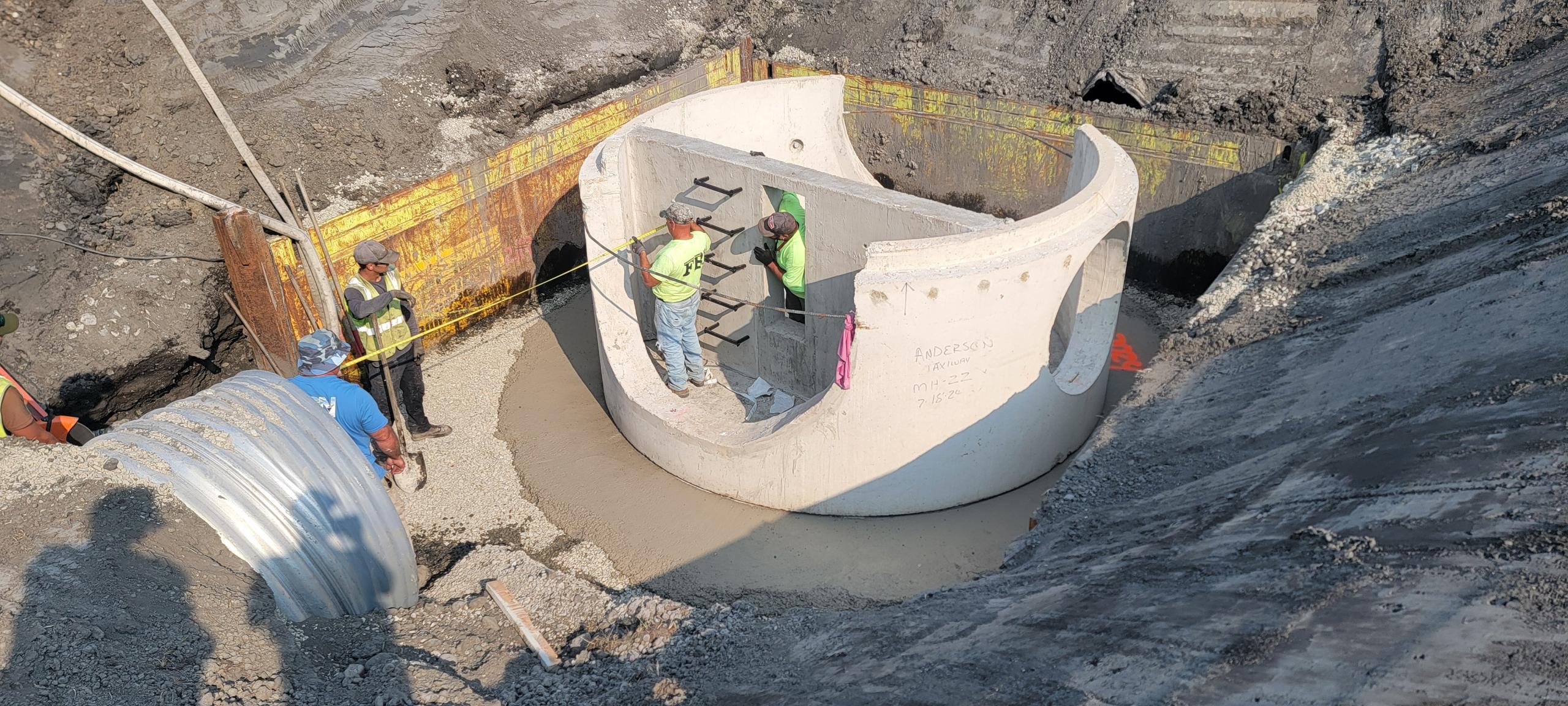
As the main parallel taxiway to Runway 9R-27L, the structural condition and geometry of Taxiway S are essential to maintaining reliable airfield operations. The upgrades enhance safety, improve aircraft maneuverability, and ensure compatibility with present and future airline fleet mixes. The improvements also include lighting, signage, and drainage upgrades and help to reduce the risk of foreign object debris, pavement failures, uneven surfaces, unplanned closures, and speed restrictions.
“The Taxiway S Reconstruction Project benefits passengers with safer operations, fewer delays, and smoother taxi experiences. For the airport, proactive reconstruction and preventive rehabilitation represent more cost-effective approaches and support future growth,” said Airport Engineering Assistant Manager Lee Sutanto.
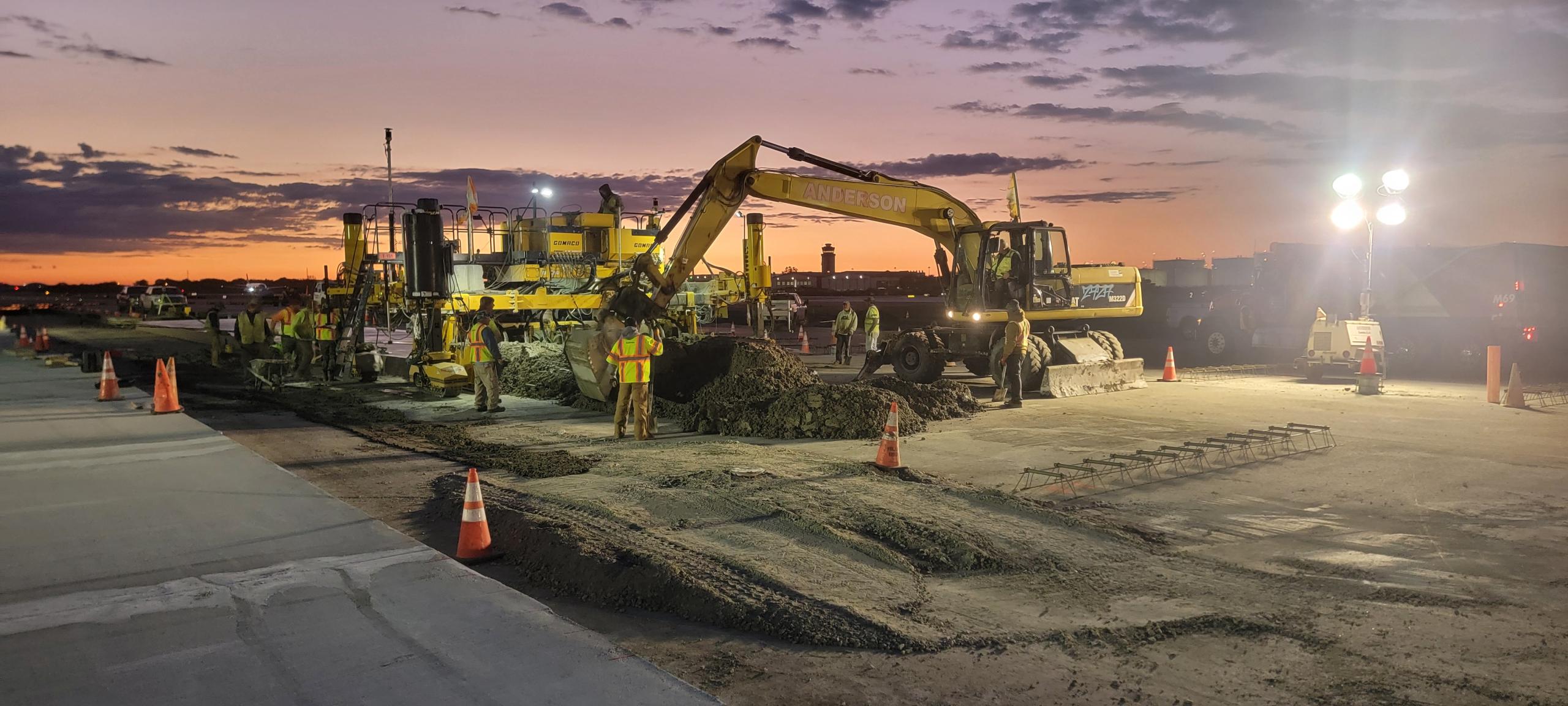
Airfield construction at a major hub airport requires extensive coordination. Taxiway S reconstruction is a multi-phased strategy that includes five phases. The construction contract for the second phase (Package 2) was awarded to Haines and Kibblehouse, Inc and work will begin near the Runway 27R end. Additionally, Package 3 is currently in design with an estimated bid procurement in Q2 2026. All phases are reviewed in meetings with key stakeholders, including airline representatives.